
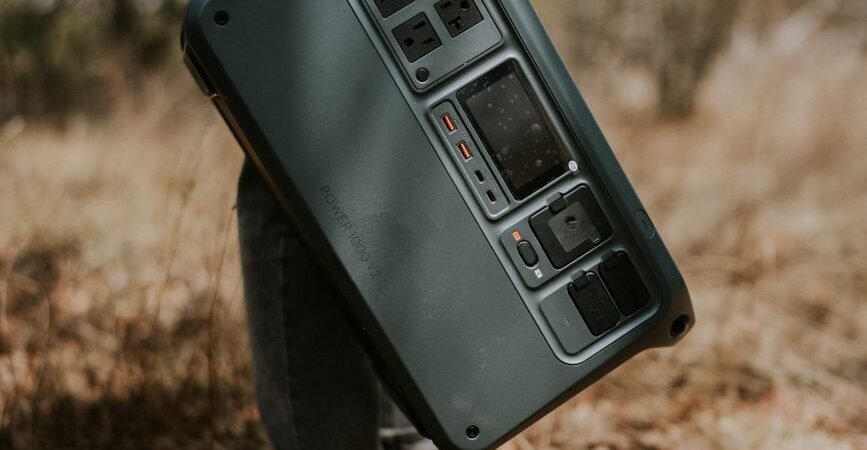
Storm season is coming, and most “best power station” lists size their picks for a weekend of camping, not a real blackout. A power station for home backup has a different job: keep your fridge cold, your phones charged, and your WiFi alive while the grid is down for hours or days. So this guide maps specific, currently-sold models to realistic outage lengths, and flags the one spec that trips people up.
The quick answer
For most homes, the EcoFlow Delta 3 Plus is the best power station for home backup: 1,024Wh of LiFePO4 capacity, a 3,600W surge ceiling, and a 10ms switchover that keeps your fridge running through a cut. On a tight budget for small essentials only, grab the EcoFlow River 3 Plus. Bracing for a multi-day outage or want near-whole-home coverage, jump to the Anker Solix F3800. The reasoning is all in the sizing, so see the full comparison before you buy.
Some links in this article are affiliate links. If you buy through them, we may earn a small commission at no extra cost to you. Learn more.
As an Amazon Associate I earn from qualifying purchases.
Table of contents
- How to size a power station for home backup
- Jackery vs EcoFlow vs Anker Solix: the comparison
- Best overall: EcoFlow Delta 3 Plus
- Best budget pick: EcoFlow River 3 Plus
- Best for multi-day: Anker Solix F3800
- Key takeaways
- FAQ
- The verdict
How to size a power station for home backup
Rated capacity in watt-hours (Wh) is only half the story. Before you compare price tags, you need three numbers the marketing images gloss over. In our companion piece, we broke down how to size one to what you actually run, and this is the short, decision-shaped version of that math.
Surge watts: the spec the roundups skip
Here is the gotcha almost every list ignores. A device’s running watts and its starting watts are not the same number. A fridge might sip 120W while it hums, but its compressor can spike to 800W or more the instant it kicks on. A sump pump running at 800W can surge past 2,000W on startup.
So a station advertised at “1,000W continuous” can trip the moment that motor fires, even though your running-watts math looked safe. Always check the surge (or peak) rating, not just the continuous one. For anything with a compressor or pump, you want headroom of at least double the running load.
Real runtime vs rated capacity
Rated Wh is a lab number. Real runtime is lower, because the inverter loses roughly 10 to 15% converting battery DC to household AC. Then you subtract what you actually run.
Take a realistic outage load: a fridge cycling on and off (averaging about 50W over the hour), a modem and router pulling about 12W, and phones trickling in another 10W. That is roughly 70W of steady draw. A 1,024Wh unit gives you about 900Wh usable, which lands near 12 to 14 hours. That covers an overnight cut comfortably. It does not cover three days, and no honest chart says otherwise. Meanwhile, smart plugs can cut what those always-on devices pull when the power is on, stretching every future outage.
LiFePO4 cycle life, and why you may be overpaying
Nearly every serious model now uses LiFePO4 (LFP) chemistry, rated around 3,000 to 4,000 charge cycles before dropping to 70 to 80% of original capacity. That is a decade-plus of daily use.
Here is the honest, slightly contrarian part: if this unit only comes out during outages, you will never touch that cycle count. Paying a premium purely for cycle life makes sense if you also plan daily solar or peak-shaving, not if it lives in a closet 360 days a year. Buy for capacity and surge headroom first.
Jackery vs EcoFlow vs Anker Solix: the comparison
All three brands make genuinely good LiFePO4 units in 2026. The differences that matter for backup are surge ceiling, switchover speed, and how far each scales. Here is the lineup mapped to outage length.
| Model | Capacity | Continuous / surge | LFP cycles | Sized for | Price |
|---|---|---|---|---|---|
| EcoFlow River 3 Plus | 286Wh | 600W / 1,200W | 3,000+ | Phones, WiFi, laptop (2 to 4h) | check current price on Amazon |
| Jackery Explorer 1000 v2 | 1,070Wh | 1,500W / 3,000W | 4,000+ | Fridge plus essentials, overnight | check current price on Amazon |
| EcoFlow Delta 3 Plus | 1,024Wh | 1,800W / 3,600W | 4,000 | Fridge plus essentials, best all-rounder | check current price on Amazon |
| Anker Solix C1000 | 1,024Wh | 1,800W / 2,000W | 4,000+ | Fridge plus essentials, quiet | check current price on Amazon |
| Jackery Explorer 2000 Plus | 2,042Wh (to 24kWh) | 3,000W | 4,000 | Full day, expandable | check current price on Amazon |
| Anker Solix F3800 | 3,840Wh | 6,000W (120/240V) | 3,000+ | Multi-day, near-whole-home | check current price on Amazon |
*Specs above are from each manufacturer’s published pages. Prices shift constantly, so we link to check the live number rather than print one that goes stale.*
Best overall for most outages: EcoFlow Delta 3 Plus
For the typical home riding out a few hours to an overnight cut, the Delta 3 Plus hits the sweet spot. It pairs 1,024Wh of LiFePO4 with an 1,800W continuous output and, crucially, a 3,600W surge ceiling that shrugs off fridge and pump startups. Its sub-10ms UPS switchover means a connected fridge or router never notices the grid dropped.
Who it’s for: most households wanting real backup for the fridge, network, phones, and a few lights through a short-to-medium outage.
Pros: high surge headroom, fast UPS switchover, 4,000-cycle LFP, quick recharge, expandable.
Cons: overkill for someone who only needs to charge devices; a single unit will not carry a multi-day outage without solar. You can confirm every figure on EcoFlow’s official Delta 3 Plus spec page.
Best budget pick for small essentials: EcoFlow River 3 Plus

Not everyone needs to run a fridge. If your goal is keeping phones, a modem, a router, and a laptop alive through a 2 to 4 hour cut, the River 3 Plus is the honest budget answer at 286Wh (expandable to 858Wh).
Who it’s for: apartments, renters, or anyone whose priority is staying connected, not keeping food cold.
Pros: light, quiet, cheap, LFP chemistry, fast charge.
Cons: 286Wh will not meaningfully run a fridge, and 600W continuous rules out most kitchen appliances. Do not stretch this one past its job. It will, however, keep your home network alive for hours.
Best for multi-day and near-whole-home: Anker Solix F3800
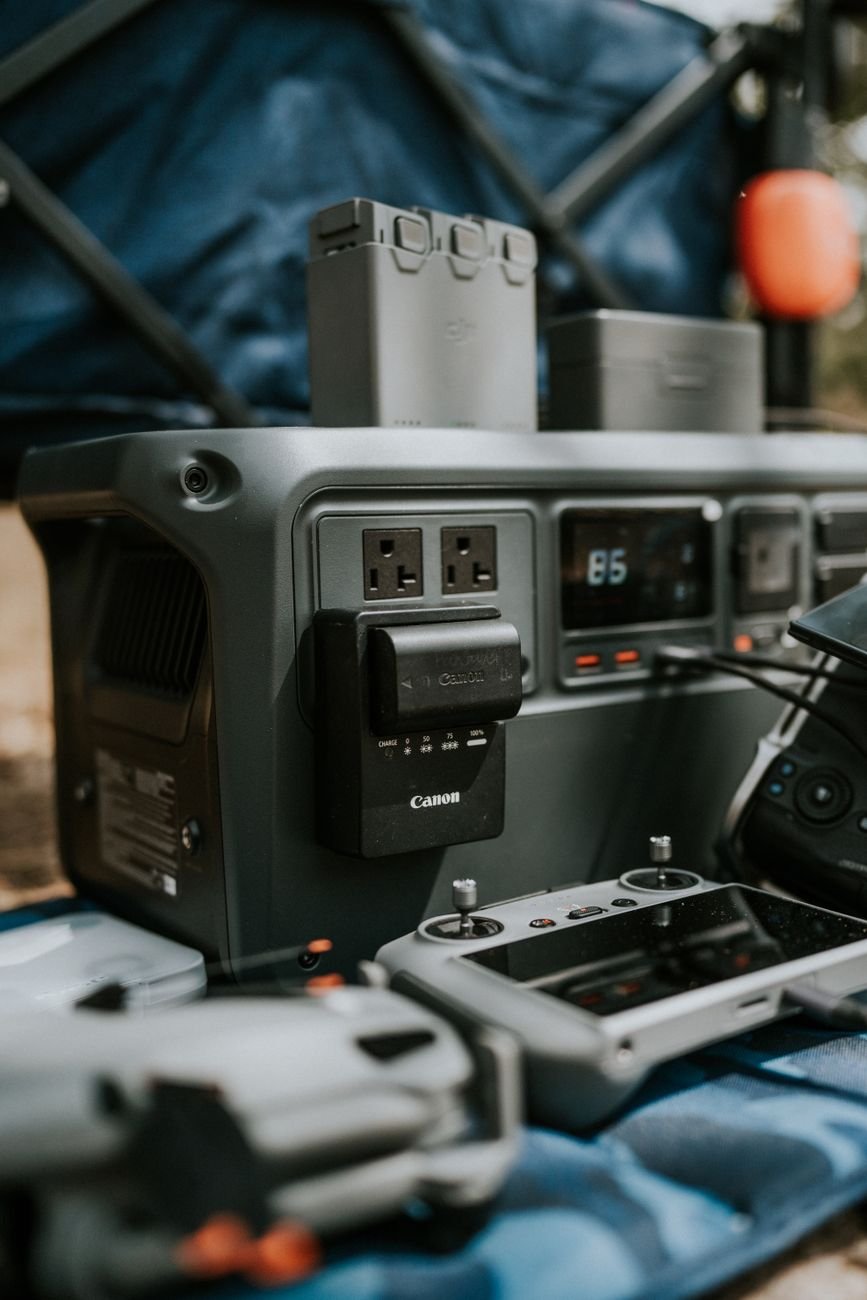
When you are planning for a genuine multi-day outage, or you want to run 240V loads and a big chunk of the house, the F3800 is the serious pick. It packs 3,840Wh, a huge 6,000W output with both 120V and 240V, and expands with extra battery packs. On an essentials-only load, that capacity stretches toward two days before you even add solar.
Who it’s for: homeowners in storm- or wildfire-prone areas, or anyone who wants backup that approaches whole-home territory.
Pros: massive capacity and surge, 120/240V, expandable, can integrate with a transfer switch.
Cons: heavy, and priced accordingly. Full specs are on Anker’s SOLIX F3800 spec sheet.
For the middle ground, the Jackery Explorer 2000 Plus (2,042Wh, 3,000W, expandable to 24kWh) is a strong full-day option that scales later, a smart buy if you want to start at one battery and grow.
Key takeaways
- Match capacity to outage length: about 300Wh for devices only, about 1,000Wh for fridge-plus-essentials overnight, 2,000Wh+ for a full day, 3,800Wh+ for multi-day.
- Check surge watts, not just running watts. Compressors and pumps spike 3 to 6x on startup.
- Real runtime is 10 to 15% below rated Wh, then minus your load. A 1,024Wh unit runs core essentials roughly 12 to 14 hours.
- LFP cycle life is generous, so do not overpay for cycles you will never use in backup-only duty.
- Best all-rounder: EcoFlow Delta 3 Plus. Budget/devices: River 3 Plus. Multi-day: Anker Solix F3800.
FAQ
What size power station do I need to run a refrigerator during an outage? A modern fridge averages around 1 to 1.5kWh per day, so a 1,000Wh+ unit covers roughly an overnight cut, and a 2,000Wh+ unit covers a full day. Confirm the surge rating clears your fridge’s startup spike.
Can a power station run my whole house? Most portable units run essentials, not central AC or electric heat. For near-whole-home coverage you want a 3,800Wh+ model with 240V output like the Anker Solix F3800, often paired with a transfer switch.
Jackery vs EcoFlow vs Anker Solix: which is best for backup? All three are solid. EcoFlow leads on fast UPS switchover, Anker Solix leads on high-output 240V models, and Jackery offers strong expandable kits. Match the surge rating and capacity to your load first, brand second.
How long will a power station last before the battery wears out? LiFePO4 models are rated for 3,000 to 4,000 cycles to 70 to 80% capacity, which is a decade or more of typical backup use.
Should I add solar panels? For multi-day outages, yes. Solar lets you recharge during daylight and effectively turns a fixed battery into an open-ended supply.
The verdict
Buy for the outage you will actually face, not the camping trip you will not. For most homes, the EcoFlow Delta 3 Plus is the right power station for home backup: enough capacity for the essentials, and enough surge headroom to survive a fridge startup. Keeping only devices alive, the River 3 Plus saves money without pretending to be more. Planning for the worst, the Anker Solix F3800 carries you for days. Check the surge spec, do the runtime math, and you will buy once instead of twice.