
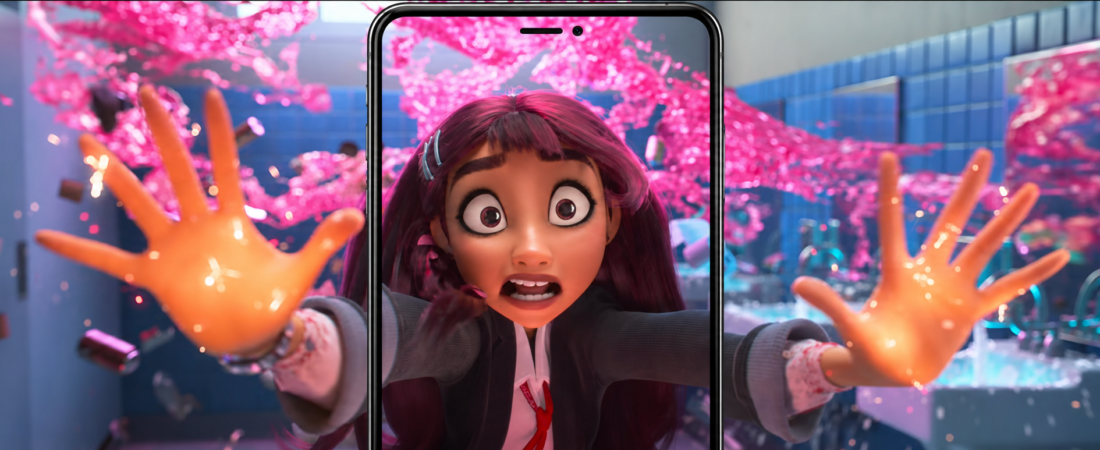
Was Hexed made for TikTok? That question started spreading after Disney released the first trailer for its new animated movie. Viewers noticed that the characters, faces and most of the important action stayed unusually close to the center of the screen.
Some fans cropped the widescreen trailer into TikTok’s vertical format and discovered that much of it still worked. That led to a fascinating theory: Did Disney frame the movie so its scenes could be easily turned into TikToks, Instagram Reels and YouTube Shorts?
The trailer gives viewers a reason to ask. However, the available evidence does not prove that Hexed was designed for vertical video, and the movie’s directors have directly denied the claim.
The quick answer
No, the available evidence does not show that Hexed was made for TikTok. The theory started because much of the trailer keeps important characters and action in the center, making it unusually easy to crop into vertical video. However, directors Jason Hand and Fawn Veerasunthorn said the claim was not true.
On this page
- Was Hexed made for TikTok? What started the debate?
- Why people think it was made for TikTok
- What happens when the trailer is cropped
- What the directors said
- Disney is already embracing vertical video
- Does centred framing prove anything?
- Could TikTok change how movies are made?
- Key Takeaways
- Frequently Asked Questions
- The bottom line
Was Hexed made for TikTok? What started the debate
Hexed is the next original animated feature from Walt Disney Animation Studios.
It follows Billie, an unconventional teenager who discovers that she has magical abilities. Those powers send Billie and her mother, Alice, into a hidden realm of witches called Hexe, where they uncover mysteries about their family.
Disney lists the movie’s theatrical release date as November 25, 2026. The studio describes it as a “spectacle-filled journey” involving magic, family and a world of witches. You can read the official synopsis on the Walt Disney Animation Studios website.
The TikTok discussion is not about the movie being released vertically. Hexed is still a widescreen theatrical movie. The question is whether its shots were composed in a way that makes them easier to reuse on vertical platforms.
Why people think Hexed was made for TikTok
The theory began with the composition of the first trailer.
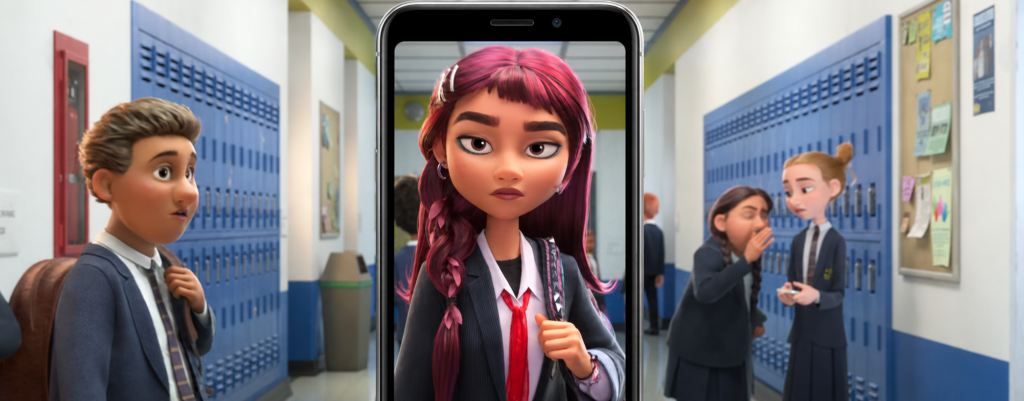
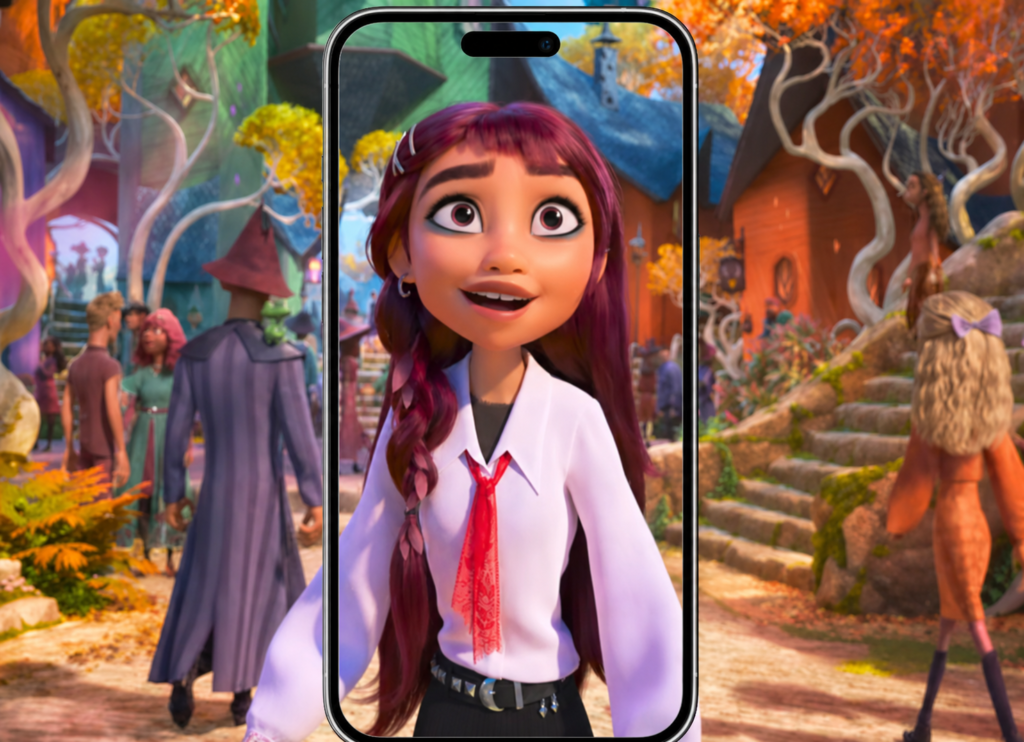
Many shots place Billie or another important character directly in the center. Backgrounds extend across the widescreen image, but relatively little essential information appears at the far left or right.
This matters because a traditional movie screen and a phone screen have very different shapes.
| Format | Common aspect ratio | What it looks like |
|---|---|---|
| Theatrical widescreen | Approximately 2.39:1 | Very wide |
| Standard video | 16:9 | Horizontal |
| TikTok, Reels and Shorts | 9:16 | Tall and vertical |
Turning a very wide movie frame into a 9:16 clip normally removes a large part of both sides. If a character or important object is near an edge, it may disappear from the vertical version.
Centering everything important solves that problem.
As Kotaku reported, fans noticed that the trailer could be cropped vertically without losing most of its characters or action. That observation quickly became the claim that Disney had designed the movie around social media.
But those are not the same thing.
What happens when the trailer is cropped vertically?
Fan-made comparisons provide the most interesting evidence behind the theory.
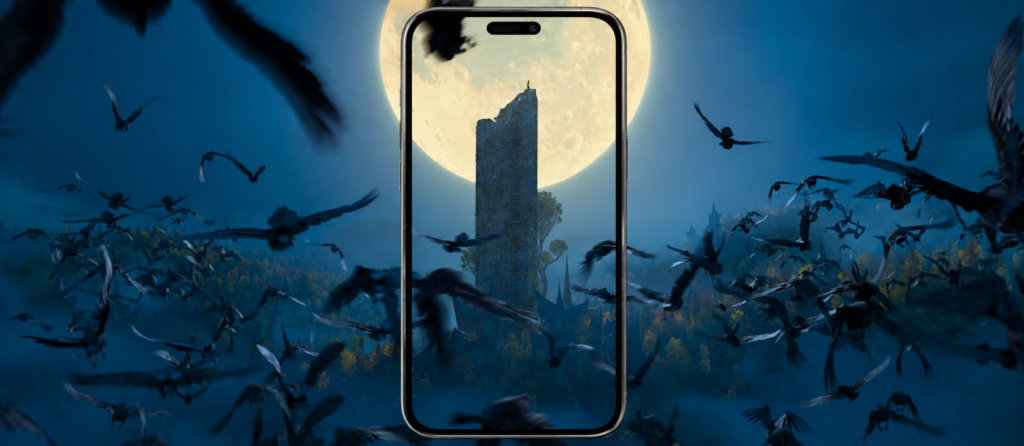
When viewers placed a narrow 9:16 frame over the trailer, they could still see most of the major characters. Faces, gestures and important visual details frequently remained inside the vertical crop. In fact, only a few shots appeared to lose something essential.
As a result, editors could easily turn many scenes into:
- TikTok clips
- Instagram Reels
- YouTube Shorts
- Vertical advertisements
- Fan edits
- Reaction videos
- Character-focused promotional clips
However, the public has only seen selected footage. Trailer editors choose a small portion of a movie and may select shots that work especially well in advertisements.
Therefore, a trailer that works vertically does not prove that the complete movie follows the same visual style.
What the Hexed directors said
The strongest evidence against the theory comes directly from the filmmakers.
Directors Jason Hand and Fawn Veerasunthorn discussed the controversy after they presented additional Hexed footage at the Annecy International Animation Film Festival.
According to an interview with Cartoon Brew, the reaction surprised both directors. They rejected the idea that they had framed the movie around vertical content.
Moreover, Hand suggested that the full movie does more interesting things with aspect ratio and with the way Billie experiences its magical world. The initial trailer may not show the complete visual approach.
Therefore, it would be inaccurate to claim that Disney made Hexed for TikTok. The trailer created a believable theory, but the filmmakers say that vertical video did not guide their creative decisions.
Disney is already embracing vertical video
The theory did not appear in a vacuum.
Disney has been actively experimenting with short vertical content. In 2026, the company announced plans to add a personalized vertical video feed to Disney+, featuring entertainment, sports and news clips. The format resembles the swipeable experience used by TikTok, Reels and YouTube Shorts. The Verge.
This change also affects how people discover and watch animated movies at home. If streaming quality matters to you, read our guide on how to watch the Super Mario Galaxy Movie in 4K without overpaying.
That creates an obvious business reason for Disney to want footage that works on phones.
A movie can produce:
- Official promotional clips
- Short character moments
- Memes
- Music clips
- Behind-the-scenes content
- Creator collaborations
- Scenes that lead viewers back to Disney+
It is therefore reasonable to believe that social media affects how Disney markets its movies.
What we cannot currently prove is that Disney allowed this marketing strategy to control the visual composition of the entire film.
Does centered framing prove anything?
Not necessarily.
Filmmakers used centered composition long before TikTok existed. For example, they may use it to create symmetry, focus attention, isolate a character or give a scene a storybook quality.
In addition, directors often keep important visual information away from the edges for practical reasons. Different theaters and devices may display the same movie in slightly different ways. Studios also need footage for trailers, advertisements and home releases.
However, viewers are not criticizing the trailer simply because its characters appear in the center. Instead, they noticed that the trailer repeatedly uses the same center-heavy approach, even when the widescreen format offers more space for creative staging.
That repetition made people suspicious. Nevertheless, one trailer cannot reveal the complete visual language of a feature-length movie. Trailer editors often make complex movies appear simpler, faster or more conventional than they really are.
Could TikTok change how movies are made?
Even if Disney did not make Hexed for TikTok, the controversy points to a larger change.
Studios no longer promote movies only through theatrical trailers, posters and television commercials. Today, a single scene may also need to work as a TikTok, a reaction clip, a meme, a YouTube Short and a vertical advertisement.
Because of that change, studios may consider social media before they finish a movie. For example, they may look for:
- Moments that make sense without context
- Faces and action that remain visible after cropping
- Short scenes with immediate emotional impact
- Dialogue that can become a quote or meme
- Characters that viewers can recognize on a small screen
- Musical moments that people can easily share
However, this does not mean every movie will become a two-hour TikTok. Instead, filmmakers and marketers now understand that many people will first encounter their work through a phone-sized clip.
Ultimately, the important question is whether studios will only market films differently or whether social platforms will gradually change their visual style. Hexed has become part of that debate, whether Disney intended it or not.
Key takeaways
- The available evidence does not show that Hexed was made for TikTok.
- Fans noticed that the trailer keeps most important characters and action near the center.
- The centered composition makes many shots easy to crop into TikTok’s 9:16 format.
- The directors denied that the movie was framed for vertical video.
- Disney is separately introducing more vertical content to Disney+.
- The controversy shows how social media may influence movie promotion, even when it does not control how the complete movie is made.
Frequently asked questions
Was Hexed filmed vertically?
No. Disney created Hexed as a widescreen animated movie for theatres. The online discussion focuses on whether the filmmakers kept important characters near the center so editors could crop scenes for vertical platforms.
Did Disney say Hexed was made for TikTok?
No. Disney has not said that, and the movie’s directors have denied that it was framed with vertical video in mind.
Why does the Hexed trailer look centered?
Many shots place characters and important action near the center. This may be an artistic or promotional choice, but Disney has not provided a detailed technical explanation for every shot in the trailer.
Can the Hexed trailer be cropped for TikTok?
Yes. Editors can crop much of the trailer into a 9:16 frame without losing the main subject. As a result, fan-made comparisons helped the theory spread online.
When does Hexed come out?
Disney currently lists Hexed for theatrical release on November 25, 2026.
The bottom line
The Hexed trailer certainly looks friendly to vertical video. Its centered characters and action survive a phone-shaped crop better than viewers expect from such a wide movie.
But “easy to crop for TikTok” is not the same as “made for TikTok.”
The directors have denied the theory, and audiences have not seen enough of the finished movie to prove otherwise. For now, the most interesting conclusion is not that Disney secretly made a vertical film. It is that TikTok has become influential enough for viewers to examine the framing of a theatrical movie and seriously wonder whether the phone screen came first.