

You step off a 9-hour flight, phone still in airplane mode, and by the time you reach baggage claim your maps, messages, and ride app are already working. No SIM tray, no airport kiosk, no bill shock. That is the whole promise of the best travel eSIM 2026 picks, and it is not marketing fluff: a QR code you scan before takeoff can turn a two-week data bill from roughly $168 on carrier roaming into about $23 on a data pack. This guide shows how eSIM actually works, the real cost math against roaming, and how to pick the right plan so you land abroad connected without overpaying.
The quick answer
For most trips, buy a regional eSIM data pack (about 10GB) before you fly and skip your carrier’s day pass. It usually costs one-tenth of roaming for a two-week trip, and you install it in minutes with a QR code. Heavy streamers who want zero math should look at an unlimited plan instead, and country-hoppers want a global one. The full reasoning, including the exact cut-offs for fixed vs regional vs global and the real cost chart, is below.
Jump to: How eSIM works · Cost vs roaming · Which type to buy · The gotchas · Set it up before takeoff
What an eSIM actually is
An eSIM is a SIM card that lives inside your phone as software instead of a plastic chip. The hardware is a tiny secure chip built into the board, and a carrier’s profile (your number, your plan, the network settings) gets downloaded onto it. According to the GSMA, the body that writes the eSIM standard, your phone can hold several of these profiles at once and switch between them, though only one runs your data at a time.
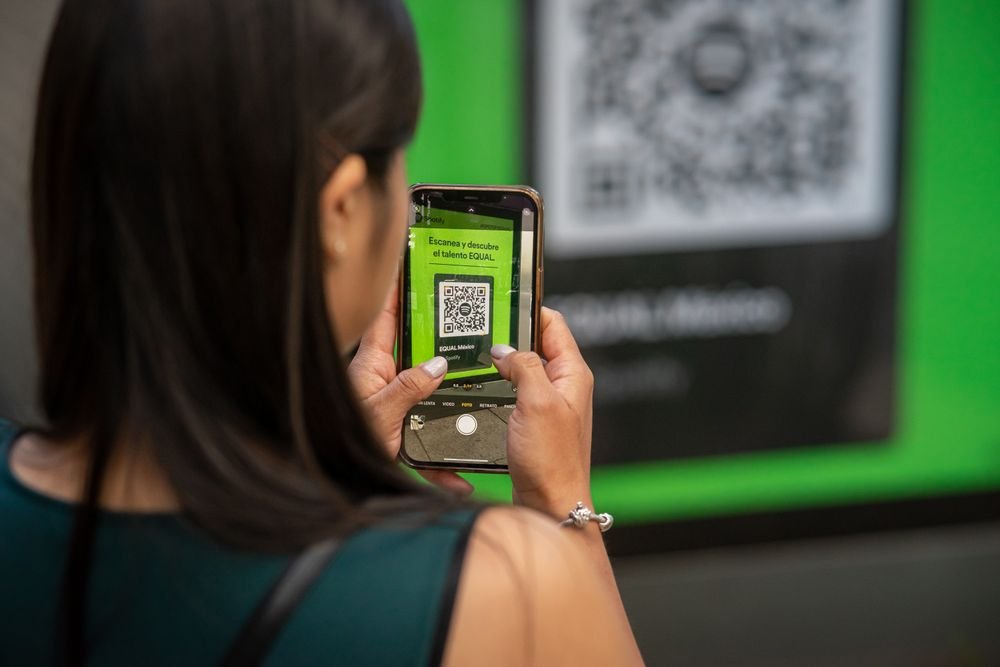
In practice, buying a travel eSIM looks like this. You pick a plan online, pay, and the provider emails you a QR code. You scan it in your phone’s settings, and a new line appears alongside your normal one. That is it. There is nothing to ship and nothing to swap at the airport.
The part that saves you money is timing. You can install the eSIM at home on your WiFi, days before you leave, and just leave it switched off. When you land, you flip it on, set it as your data line, and you are connected to a local network in seconds. No hunting for a shop, no fumbling with a paperclip over a trash can.
One thing to confirm first: your phone has to be eSIM-capable and carrier-unlocked. Every iPhone from the XS onward, recent Google Pixels, and most flagship Samsung Galaxy phones support it. If you are on a device your carrier financed and locked, ask them to unlock it before you go.
eSIM vs roaming: the real cost math
Here is where the decision gets easy, because the gap is not subtle. Roaming day passes charge you per day, every day, whether you use 50MB or 5GB. A travel eSIM charges you once for a block of data.
Take a realistic two-week trip to Europe. On Verizon TravelPass at $12 a day, 14 days runs $168. On AT&T’s International Day Pass at $10 a day, that is $140. T-Mobile’s $5-a-day pass brings it down to $70, which is better but still per-day. Against that, a 10GB regional Europe eSIM from a provider like Nomad or Airalo lands around $23 to $30 for the whole trip. For most travelers, 10GB over two weeks is plenty for maps, messaging, rideshare, and a reasonable amount of scrolling.
| Option | Price basis | 14-day total |
|---|---|---|
| Verizon TravelPass | $12/day | $168 |
| AT&T International Day Pass | $10/day | $140 |
| T-Mobile International Pass | $5/day | $70 |
| eSIM 10GB regional pack (Nomad/Airalo) | one-time | $23 to $30 |
So the honest headline is not “eSIM saves you a little.” It is that a data pack can cost roughly one-fifth of even the cheapest day pass and one-seventh of the priciest. The catch, and it is a fair one, is that a roaming pass keeps your normal phone number fully working for calls and texts, while a data-only eSIM changes how that behaves. We will get to exactly what that means in the gotchas.
Fixed vs regional vs global: how to pick
Most confusion around the best travel eSIM 2026 options comes from plan types, not providers. There are really three shapes, and your trip decides which one fits.
Fixed (single-country) plans. These cover one country, usually at the lowest per-GB price. Buy a fixed plan when your whole trip stays inside one border: a week in Japan, ten days in Mexico, a work stint in the UK. Cut-off rule: if you will cross zero borders, go fixed and pocket the savings.
Regional plans. These cover a whole region, like Europe’s 30-plus countries or Southeast Asia, on one profile. Buy regional when you will visit two or more countries in the same region and do not want to reinstall anything at each border. Cut-off rule: two-plus countries in one region equals regional. This is the sweet spot for the classic multi-country Europe trip.
Global plans. These cover 100-plus countries on a single eSIM. They cost more per GB, but you install once and forget it. Buy global when your itinerary jumps between regions (say Europe then Asia), or when you travel constantly and value never thinking about it. Cut-off rule: crossing regions, or more than a few trips a year, tips you toward global.
Two more quick calls. If you genuinely cannot predict your usage and hate running low, an unlimited plan (Holafly is the best-known, around $36.90 for 10 days in Europe) removes the math, though “unlimited” comes with fine print we cover next. And if you want light backup data more than a full plan, a small fixed pack for the odd map lookup is cheaper than any day pass.
The gotchas roundups skip
This is the part most “best eSIM” lists breeze past, and it is the part that actually trips people up.
Your home number goes quiet for calls and texts. A travel eSIM almost always sells you data only. When you set it as your data line, your regular number still exists on your other line, but incoming calls and SMS will either roam (sometimes at ugly rates) or need you to keep that home line active. The fix is simple once you know it: in your settings, keep your home line switched on for calls and texts but set the eSIM as the line for cellular data, and turn off data roaming on the home line so it never quietly bills you. Apps like WhatsApp, iMessage, and Signal keep working normally over the eSIM’s data.
“Unlimited” usually is not, exactly. Unlimited plans commonly run at full speed up to a soft cap, then throttle to slower speeds for the rest of the day, and they cap or block hotspot and tethering. That is fine for one phone streaming maps and video. However, it is a problem if you planned to tether a laptop for real work. Read the daily fair-use line before you buy.
One eSIM, one device. A profile is tied to the phone you install it on. You cannot pass it to your travel partner’s phone, so two travelers means two eSIMs.
Coverage rides on a local partner network. Your eSIM provider resells access to a local carrier, so real-world speed depends on which network they use in that country. In big cities this rarely matters. In rural areas, though, a provider that partners with the dominant local network will simply work better, which is why the well-known names tend to earn their slightly higher price.
And a security note that has nothing to do with your SIM type: the network you connect to still matters. Airport and hotel WiFi is convenient and wide open, so a VPN on public WiFi is worth setting up before you travel. Your eSIM keeps your phone on cellular, but the moment you or your laptop hops onto free WiFi, the smart move is the same as at home: encrypt the connection.
How to set it up before takeoff
The whole point is to do this calmly on your home WiFi, not in an airport.

- Confirm your phone is eSIM-ready and unlocked. Check the manufacturer’s list or your settings for an “Add eSIM” option.
- Buy the right plan type using the framework above, matched to your trip shape and rough data need. For a two-week single-region trip, 10GB is a safe default.
- Install the QR code at home. Scan it, let the profile download, then label the line something like “Travel.” Leave it switched off.
- On landing, flip it on. Set the travel eSIM as your cellular data line, keep your home line on for calls and texts, and turn off data roaming on the home line.
- Turn on the eSIM’s data roaming. This sounds backwards, but a travel eSIM often needs its own roaming toggle enabled to reach its partner networks. That is normal and does not cost extra.
That is the entire ritual. Five minutes at home, ten seconds at the gate.
So, which is the best travel eSIM 2026 for you?
For the overwhelming majority of travelers taking a normal one-region trip, a 10GB regional eSIM bought before departure is the right answer: it is a fraction of roaming, it installs in minutes, and it puts you online the moment you land. Reach for unlimited only if you refuse to track data and stay in one region, and reach for global only if your itinerary crosses regions or you travel constantly. Keep your carrier’s day pass in your back pocket for the rare short trip where you would rather pay for zero setup. Whatever you pick, the win is the same: you walk off the plane already connected, and the money stays in your trip budget instead of your phone bill. For more ways to stay connected on the road, our breakdown of whether your phone works with Starlink is a good next read.